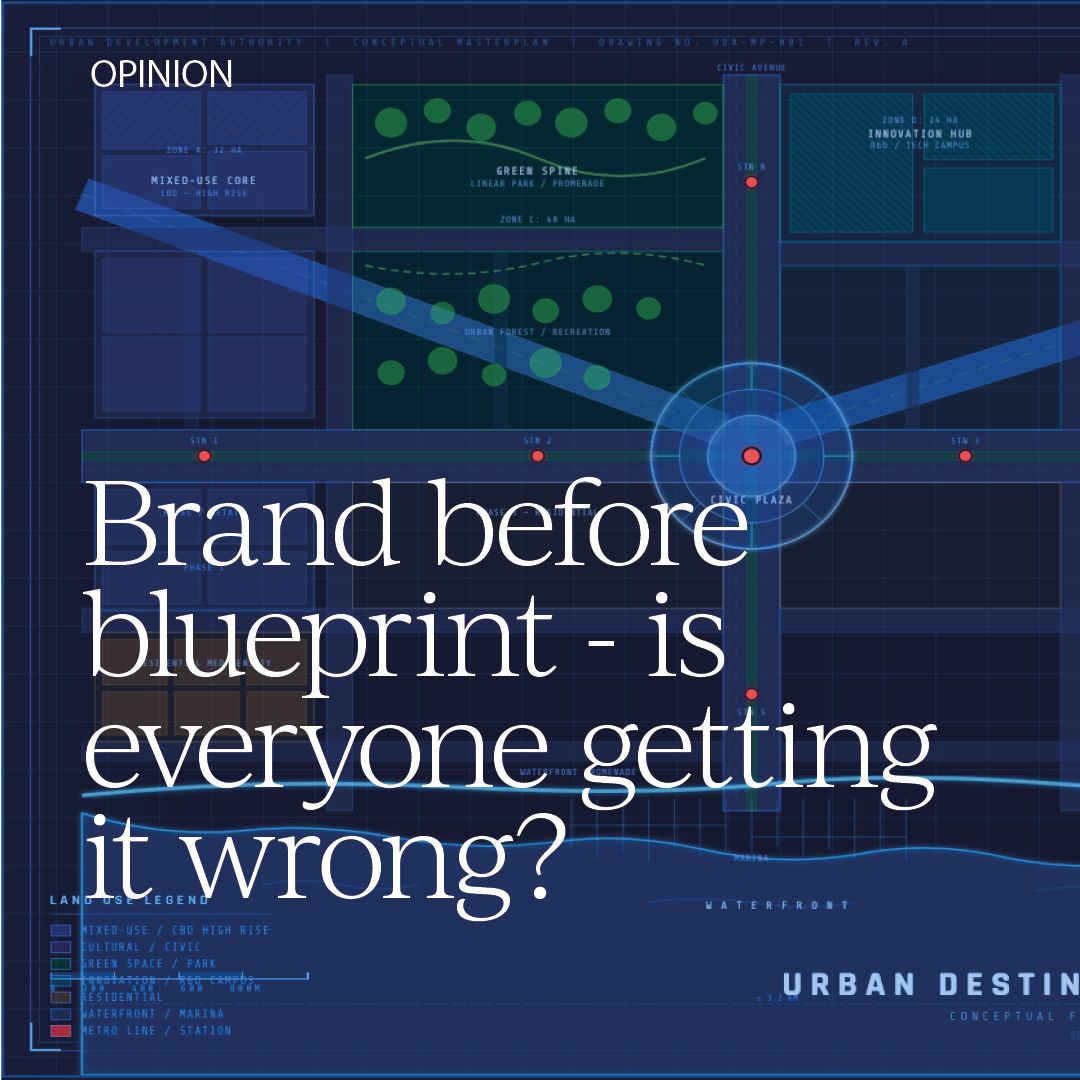

Branding before blueprint – is everyone getting it wrong?
Ask most masterplanners when brand thinking should enter the process and you’ll often hear the same answer, “after the spatial concept is set. Brand can tell the story, choose the palette, name the zones. But the big decisions like land uses, densities and the public realm structure, well, those come first, right…”.
So branding is often asked to provide a narrative for a physical plan that was never designed with a clear identity in mind. The result is familiar, developments that appear coherent on paper but feel generic in reality. Places that could exist almost anywhere, and, therefore, struggle to belong anywhere in particular.
The reality is that every masterplan already carries implicit assumptions about identity. Decisions about land use, hierarchy, movement and centres of activity all express something about who a place is for and the kind of life it intends to support.
If those assumptions haven’t been consciously defined through brand strategy, they will still be made, usually through precedent, instinct, or reference to what worked somewhere else. The plan may be technically accomplished, but it can still miss the deeper opportunity to create a place with genuine distinctiveness.
For that reason, a number of questions are worth addressing before the first land-use diagram is drawn.
1. Who is this place truly for, not simply as a demographic category, but in terms of values, aspirations and ways of living?
2. What is the destination’s single organising idea?
3. Where does its authentic distinctiveness actually lie. In landscape, culture, heritage or local production and how do we avoid claiming too much?
4. What should the experience of moving through the place feel like?
5. And just as importantly, what should this place never become?
When brand comes before blueprint, the spatial design gains a framework it can be tested against. Trade-offs become clearer. Design decisions become easier to justify. The relationship between identity and form becomes intentional rather than accidental.
The places that endure, that develop loyalty rather than simply attracting footfall, tend to be those where the question of identity was asked before the question of layout. The foundation for creating places that feel genuinely distinctive.
airdesign makingplacespeoplelove branding placebranding brandstrategy